120 Days Mon - Fri From (10 AM - 10 PM) IST
Odoo

5 MIN READ

April 16, 2026

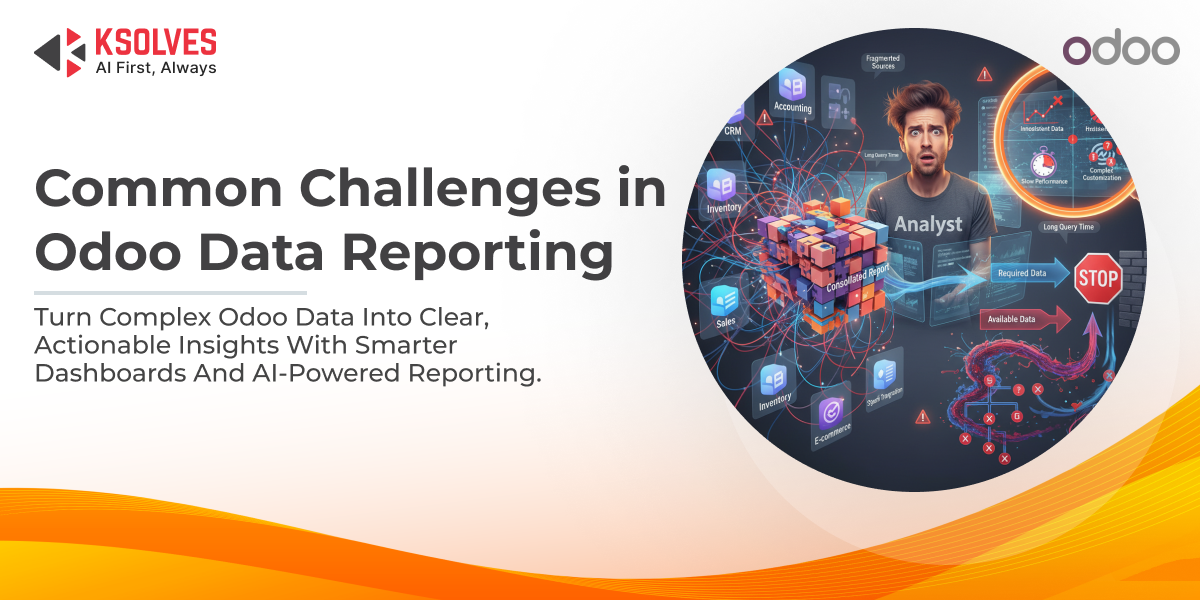
Dashboards play a vital role in transforming raw Odoo data into meaningful business insights. They help decision-makers track performance, identify bottlenecks, and respond quickly to changing business conditions. However, poorly designed Odoo dashboards often overwhelm users with excessive data or fail to highlight what truly matters. When dashboards lack clarity, real-time accuracy, or cross-module visibility, they can hide insights instead of enabling informed decisions. Overcoming these common Odoo data reporting challenges is essential for building dashboards that are insightful, actionable, and aligned with business goals.
One of the most common challenges in Odoo data reporting is the absence of clearly defined objectives. When dashboards are built without a strong understanding of business goals, they tend to become data-heavy and insight-light. Identifying key performance indicators (KPIs) before creating dashboards ensures that the data presented directly supports strategic and operational decision-making. Focusing on metrics that drive growth, efficiency, and profitability allows organizations to move beyond data collection and toward outcome-driven reporting within Odoo.
Selecting the right visualization is critical for effective Odoo reporting . Using incorrect or excessive chart types can confuse users and dilute key insights. Data related to trends, comparisons, or distributions should be represented using visuals that make interpretation intuitive and quick. A clean, well-structured dashboard improves readability and ensures that users can grasp insights at a glance. Thoughtfully designed visualizations reduce cognitive load and help teams make faster, more accurate decisions using Odoo dashboards.
Many organizations struggle with fragmented reporting because data is spread across multiple Odoo modules such as Sales, CRM, Inventory, Accounting, and HR. When dashboards fail to integrate this data, decision-makers lack a complete view of business performance. Cross-module data integration enables organizations to correlate operational, financial, and customer data within a single dashboard. This unified approach eliminates data silos and provides a comprehensive understanding of business health across departments.
Also Read – How Odoo Hotel Management Automates Housekeeping
Outdated or delayed reports can lead to missed opportunities and reactive decision-making. Real-time data reporting in Odoo is crucial for monitoring performance metrics as they change. Live dashboards allow businesses to respond immediately to fluctuations in sales, inventory levels, customer activity, or financial KPIs. Real-time visibility enhances agility and ensures that decisions are based on current, accurate information rather than historical snapshots.
Traditional Odoo dashboards primarily focus on displaying historical data, leaving users to manually identify trends or anomalies. AI-driven reporting addresses this limitation by analyzing patterns, detecting irregularities, and highlighting insights that may not be immediately visible. AI-powered analytics elevate Odoo reporting from descriptive to intelligent, enabling businesses to anticipate issues, uncover opportunities, and take proactive action based on data-driven insights.
Not all stakeholders require access to the same data, and unrestricted visibility can lead to security risks and information overload. Role-based access ensures that users see dashboards relevant to their responsibilities while safeguarding sensitive business data. Executives, managers, and operational teams benefit from tailored dashboards that align with their roles. Structured access control improves data governance and enhances the effectiveness of Odoo reporting across the organization.
Also Read – Top 5 Mistakes to Avoid When Integrating eCommerce with ERP Systems
Static dashboards limit analytical depth and often require additional reports for further investigation. Interactive dashboards empower users to explore data through filters, drill-downs, and dynamic widgets. This interactivity allows teams to analyze performance at multiple levels and uncover root causes directly within the dashboard. Actionable and interactive reporting ensures that dashboards support exploration, decision-making, and continuous improvement.
Sharing insights across teams and stakeholders is a key requirement of effective Odoo reporting. Dashboards that cannot be easily exported or shared reduce collaboration and slow decision-making. The ability to export dashboards in common formats such as PDFs or images enables organizations to use insights in meetings, reviews, and presentations. Seamless sharing ensures that data-driven insights reach the right audience at the right time.
Inaccurate data leads to bad decisions. Get your Odoo reporting fixed today.
Overcoming common challenges in Odoo data reporting requires a strategic approach that prioritizes clarity, real-time accuracy, intelligent insights, and usability. Well-structured dashboards improve visibility, support faster decision-making, and enhance overall business efficiency. By adopting best practices in dashboard design and leveraging advanced analytics, organizations can unlock the full value of their Odoo data.
To achieve this effortlessly, Dashboard Ninja with AI enables Odoo users to build powerful, interactive, and intelligent dashboards without complexity. It brings together multi-module data, real-time updates, AI-driven insights, role-based access, and seamless sharing; helping businesses turn Odoo data into actionable intelligence and smarter decisions.
Book your free demo now!